

Glaucoma has a reputation for being a disease that doesn’t cause many obvious symptoms, and in most cases, that reputation is accurate.
The first sign of glaucoma is often a slow loss of peripheral vision that develops so gradually most people never notice it happening. By the time it becomes obvious, vision has often already been lost.
Keep reading to find out why it’s so easy to miss, and what actually catches it before real damage is done.
Why Does Glaucoma Have No Early Symptoms?
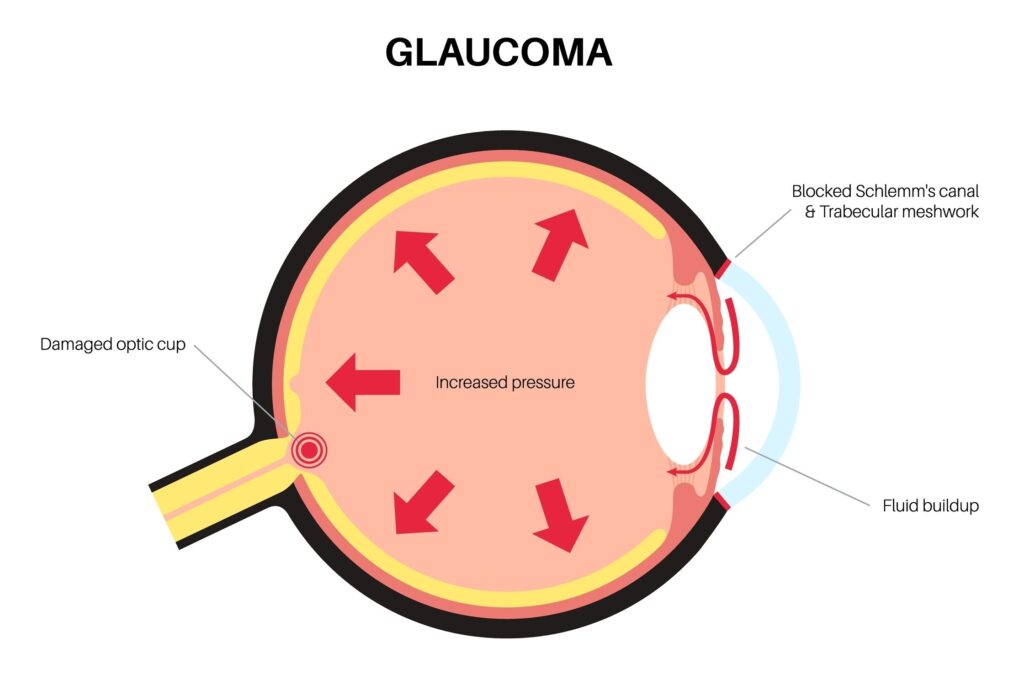
Glaucoma is a group of eye conditions in which rising fluid pressure inside the eye gradually damages the optic nerve, and open-angle glaucoma does this so slowly that the eye adapts without complaint. Open-angle glaucoma, the most common form of the disease, causes no pain, no redness, and nothing that would send most people to urgent care.
Fluid inside the eye normally drains at a steady rate. In glaucoma, that drainage slows down, and pressure builds instead of releasing. That pressure damages the optic nerve fibers a little at a time, and nerve tissue doesn’t send pain signals the way skin or muscle does.
There’s no internal alarm for rising eye pressure, so the damage accumulates well before a person has any reason to suspect something is wrong.
Why Is Peripheral Vision Loss So Easy to Miss?
Glaucoma damage typically starts at the outer edges of the visual field and works inward, and that pattern is part of why it goes unnoticed for so long.
Central vision, the sharp detail used for reading, driving, and recognizing faces, is usually the last thing affected. Two other factors compound the problem. Each eye covers part of the other’s blind spots, so damage in one eye can hide behind normal vision in the other for years. And the brain is very good at filling in gaps, smoothing over missing information so a person perceives a complete picture even when part of it is gone. Someone can lose a percentage of their peripheral field and still read a menu, still drive to work, all without noticing anything different.
The first sign of glaucoma is a gap a visual field test can measure long before it would ever be felt.
What Are the Warning Signs of Angle-Closure Glaucoma?

Angle-closure glaucoma follows a different and far more alarming pattern.
Instead of building slowly, pressure spikes suddenly when the drainage angle of the eye closes off entirely. Unlike the open-angle form, this version is impossible to miss.
Symptoms come on fast and include:
- Sudden, severe eye pain or headache
- Blurred vision or halos around lights
- Nausea or vomiting accompanying the eye pain
This is a medical emergency. Left untreated, angle-closure glaucoma can cause permanent vision loss within days rather than years. It’s a smaller share of glaucoma cases overall, but it makes an important point.
Angle-closure glaucoma can announce itself loudly. But the quiet, more common form is the one that needs the most vigilance, because there’s nothing to notice.
Who Is Most at Risk for Glaucoma?
Certain factors make screening especially important, since glaucoma itself won’t provide a symptom to prompt one.
Risk increases with:
- Age over 60, when the odds of developing glaucoma rise substantially
- A parent or sibling with glaucoma, since the condition runs in families
- Elevated eye pressure found on a prior exam, even without a formal diagnosis
None of these guarantee glaucoma will develop, but they’re reasons to schedule a screening to ensure your vision is extra protected. Routine eye pressure checks are often the only thing standing between early glaucoma and permanent vision loss for many people.
How Is Glaucoma Diagnosed Before Symptoms Appear?
Because glaucoma doesn’t show up as a symptom, it is often caught during a routine eye exam.
A comprehensive dilated eye exam lets a doctor examine the optic nerve directly, checking for subtle changes in its shape and color that often precede noticeable vision loss. Eye pressure measurement, done in seconds, flags patients whose pressure is trending upward before any damage occurs.
Visual field testing maps the entire scope of a person’s vision, point by point, and can detect peripheral vision loss that would never be noticed in daily life.
At Black Hills Regional Eye Institute, our glaucoma specialists can catch glaucoma at its earliest, most treatable stage, often before a patient has any idea anything is wrong.
What Happens After a Glaucoma Diagnosis?

A glaucoma diagnosis likely means you will need ongoing management to ensure you don’t lose any further vision. Eye drops that lower pressure are usually the first line of treatment, and for patients who need more, laser and surgical options are available too.
What matters most is catching it early enough that treatment can protect the vision a person still has, rather than trying to recover what’s already lost.
First-time patients coming in for a glaucoma evaluation can fill out the new patient information form ahead of time and bring a current photo ID and insurance card to their appointment, which helps the visit start on time.
Noticing changes in your side vision? Schedule an appointment at Black Hills Regional Eye Institute in Rapid City, SD.