
One of the most common reasons people talk themselves out of LASIK is a belief that turns out to be false. They assume astigmatism automatically rules them out. Maybe an optometrist mentioned it years ago, or a friend was told they didn’t qualify. Whatever the source, the idea has stuck around far longer than it should have. The reality is that most people with astigmatism are strong candidates for LASIK, and correcting astigmatism is one of the things the procedure does exceptionally well.
What is Astigmatism?

Astigmatism is a characterization of the shape of your cornea. A healthy cornea, the clear dome at the front of your eye, is ideally curved like a basketball, evenly rounded in every direction.
An eye with astigmatism is curved more like a football, steeper along one direction than the other. That uneven curve means light entering your eye focuses at more than one point instead of landing cleanly on the retina. This causes vision to look blurry or slightly stretched at every distance, near and far.
This is why astigmatism so often shows up alongside nearsightedness or farsightedness. Many people have some combination of all three. Astigmatism is also extremely common, and small amounts are almost universal. A tiny degree of it may cause no noticeable symptoms at all, while a larger amount can leave both close-up and distant objects looking soft or doubled.
How LASIK Corrects Astigmatism
The same laser that corrects nearsightedness and farsightedness also corrects astigmatism, and it does so through the exact mechanism the condition requires.
LASIK works by using a cool ultraviolet laser to precisely reshape the cornea, smoothing that uneven football curve into a more evenly rounded surface. Once the cornea focuses light to a single point on the retina, the blur disappears.
Because astigmatism is a problem of corneal shape, and LASIK is a procedure that reshapes the cornea, the two are a natural match. The laser is programmed with detailed measurements of your specific eye, so it can flatten the steep meridian and even out the curve in a way that glasses and contacts only compensate for temporarily.
Vision correction platforms have been treating astigmatism reliably for more than two decades, and today the surgeons at Black Hills Regional Eye Institute use advanced diagnostic mapping to plan each correction down to fine detail.
How Much Astigmatism Can LASIK Treat?

Astigmatism is measured in units called diopters, and LASIK comfortably handles mild to moderate amounts, which covers most people who have it.
Higher degrees of astigmatism can often still be treated, sometimes with excellent results, though very high amounts may not be fully corrected in a single procedure. That doesn’t mean surgery is off the table. It means the improvement may be substantial rather than total, and your surgeon will be honest with you about what to expect based on your measurements.
This is exactly why the evaluation matters so much. Two people can both have astigmatism and receive very different recommendations depending on how much they have, the shape of their corneas, and the rest of their prescription. A number on a chart doesn’t tell the whole story until it’s paired with a detailed look at your individual eyes.
When LASIK Isn’t the Right Fit, and What Is
Astigmatism itself rarely disqualifies anyone. When someone isn’t a good LASIK candidate, the reason is usually something else. Thin corneas are a frequent factor, since LASIK removes a small amount of tissue and there needs to be enough to work with safely. Certain corneal conditions, such as keratoconus, cause the cornea to thin and bulge into an irregular cone shape, and these cases call for specialized evaluation by a cornea specialist rather than routine laser surgery. Significant dry eye can also affect healing and comfort, so it’s worth addressing before any refractive procedure.
None of these findings mean you’re stuck with glasses forever. When LASIK isn’t the best option, there are strong alternatives. PRK, a surface-based laser procedure that corrects the same refractive errors without creating a corneal flap, is often ideal for patients with thinner corneas.
A single “no” to LASIK is rarely the end of the conversation; it just means there are other procedures that may better fit your eyes.
Finding Out If You’re a Candidate
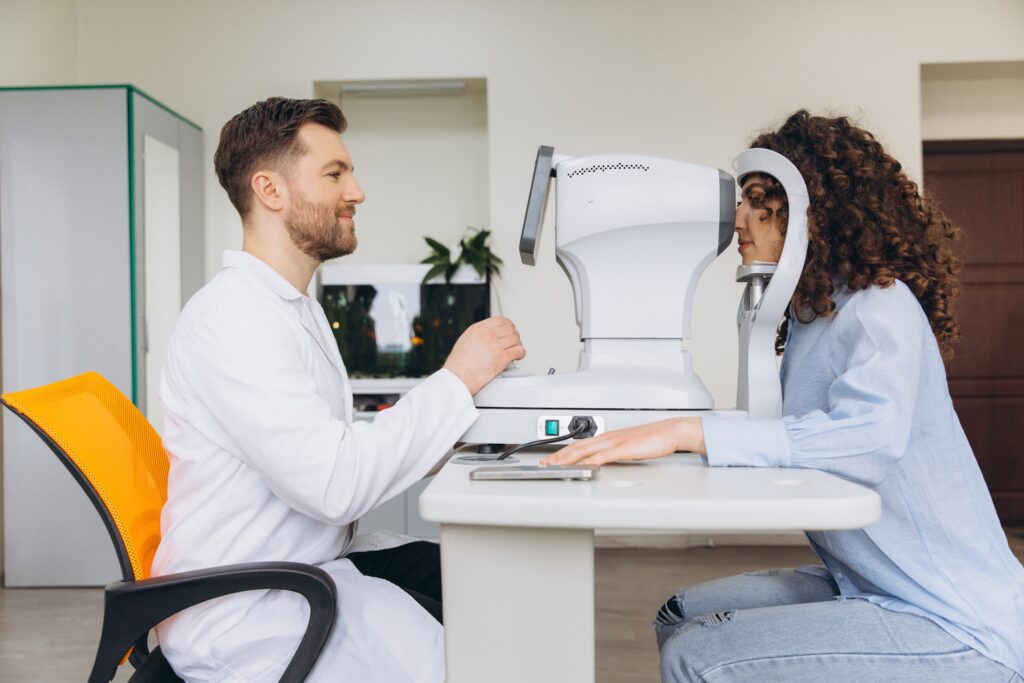
The only way to know for certain whether LASIK can correct your astigmatism is through a thorough evaluation. At a free consultation, the team performs a series of tests that map your corneal shape, measure its thickness, check your tear film, and confirm the full extent of your prescription. Those results determine your options.
As the leading provider of laser vision correction in the region since 1983, Black Hills Regional Eye Institute has built its refractive program around this kind of detailed, individualized assessment. The team will walk you through exactly what your measurements mean, explain which procedure suits your eyes, and give you clear pricing so you can make a confident decision. Having astigmatism doesn’t put clear vision out of reach. In most cases, it’s simply one more thing the laser is designed to fix.
You can start with a quick self-test to get a sense of your candidacy, but the real answer comes from measurement.
Wondering if LASIK can correct your astigmatism? Schedule an appointment at Black Hills Regional Eye Institute in Rapid City, SD.